





INDUSTRIES / MARINE
Marine Display Integration for Helm Consoles
Application Environment
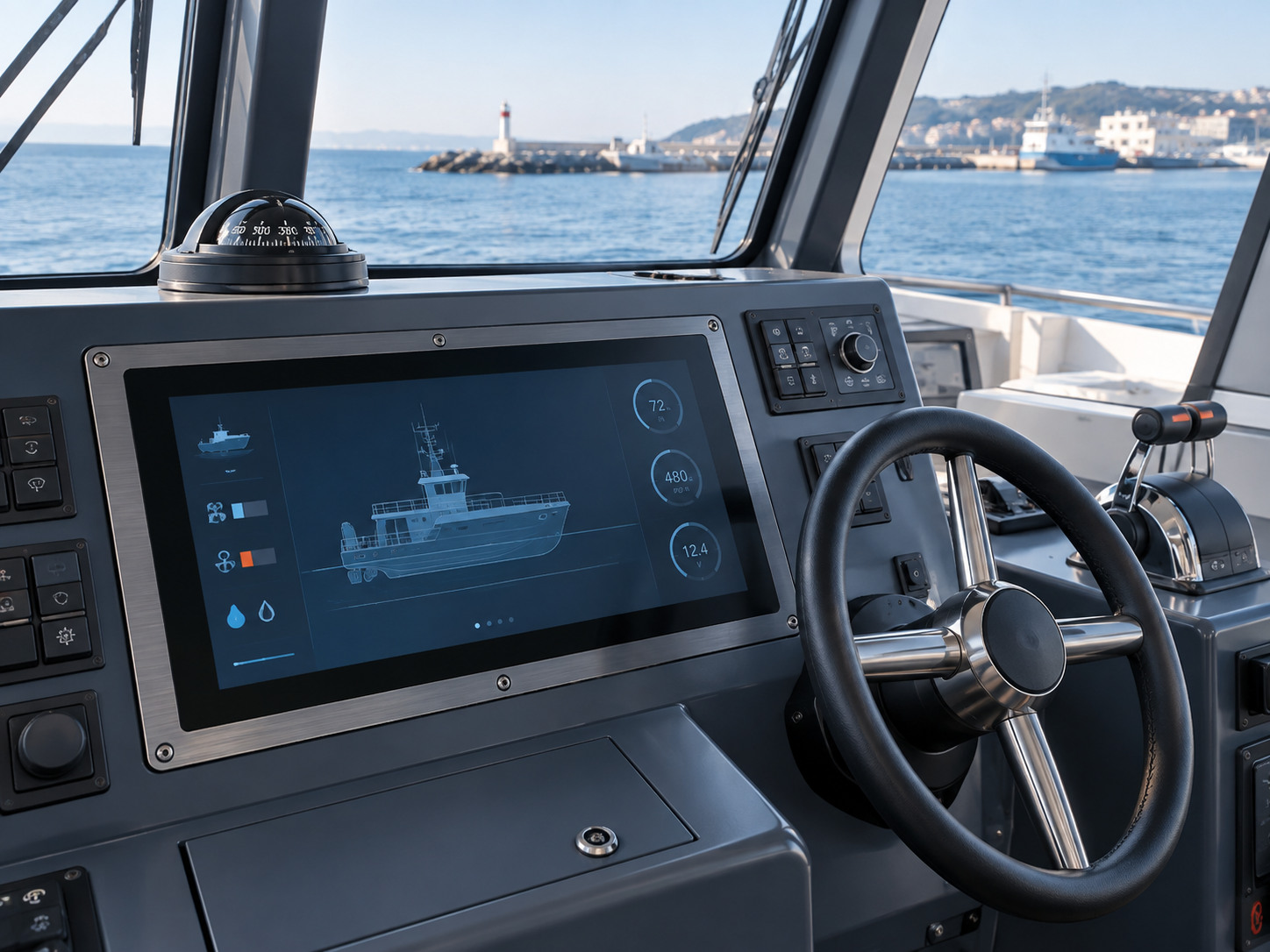
Marine display integration for a proposed console-mounted vessel equipment display starts with the helm environment and operator requirements.
Identify whether the helm is enclosed or exposed. Daylight, night operation, salt-laden moisture and occasional spray place different demands on the front surface and the protected rear space. The installation boundary determines the sealing requirement.
For marine display integration, provide the console opening, mounting depth, display viewing position and available rear access. Record whether users need glove input or physical keys, and how they will switch between day and night viewing. Resolve these inputs during engineering design before selecting the front stack and enclosure interface.
Temperature & front protection
Specify operating temperature, humidity and storage separately. A front IP65 target must be verified in the installed configuration; it is not a claim of immersion protection or salt-corrosion resistance.
02 / APPLICATION CHALLENGES
Display & HMI Challenges
Daylight and night readability
Evaluate reflections in bright conditions and the required dimming range at night from the actual helm position.
Water on the touch surface
Water films may affect input behaviour. Decide whether touch operation, wet-touch rejection or physical-key operation is required in that condition.
Moisture around the mounting joint
The glass-to-frame joint, console gasket and rear connections need a consistent moisture-management approach.
03 / INTEGRATION STRUCTURE
Marine display integration approach
Optical performance
Evaluate the LCD, cover finish and optional optical bonding together; confirm the night setting with the vessel integrator.
Wet-use interaction
Select and tune the touch configuration for agreed surface conditions. Consider dedicated physical keys for functions requiring an alternative input.
Console enclosure interface
Define the metal finish, mating materials, perimeter seal and protected cable routing against the actual exposure.
04 / DELIVERY FORM
Marine display integration: proposed delivery
Proposed delivery: a console-fit display and touch assembly, with optional keypad integration.
- LCD and front optical stack with specified brightness-control interface
- Touch controller and optional project-defined physical keys
- Console mounting frame, front gasket and agreed rear connections
Vessel networks, navigation software and marine type approvals are outside this proposed assembly scope unless explicitly agreed.
Agree a verification plan for the chosen display, input method and installed seal. Include the surface condition, viewing conditions and functional checks to be assessed. Share drawings and the exposure requirements through our project enquiry form; certification or vessel-level approval requires separate evidence.
Use the display integration project brief checklist to organize the drawings and open questions. Our engineering resources also cover component inputs and inspection records.